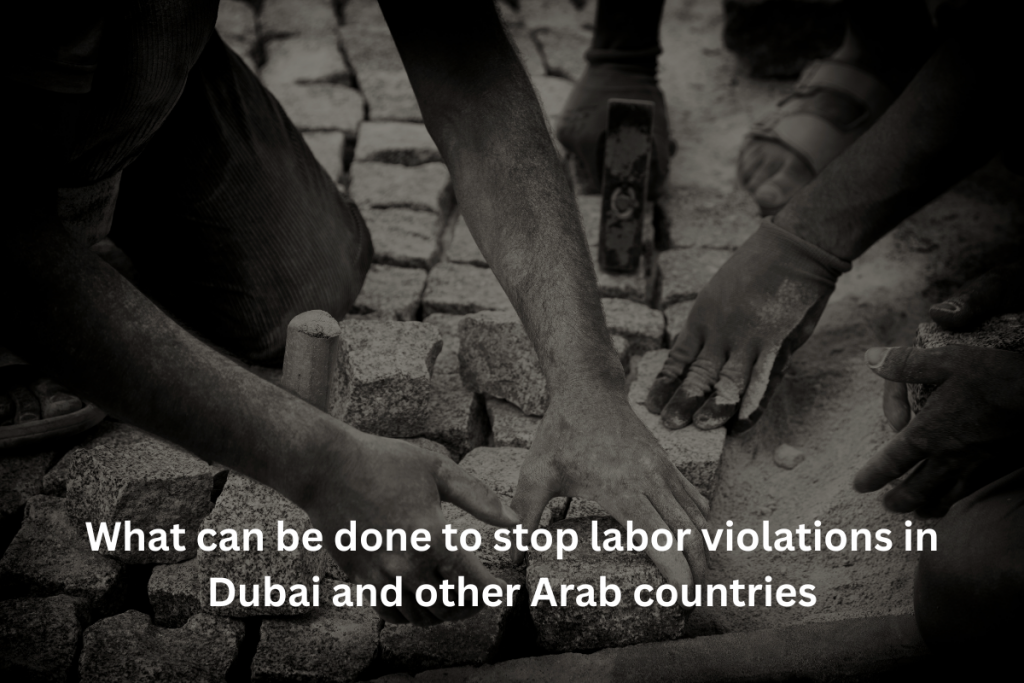
What can be done to stop labor violations in Dubai and other Arab countries
Introduction
Dubai and other Arab countries have long been known for their luxury lifestyles and world-class hospitality, but their booming economies have also led to labor violations. In this article, we will discuss some of the ways you can stop labor violations from happening in Dubai and other Arab countries.
As the global economy continues to grow, many Arab countries are looking to capitalize on their natural resources and attract businesses and tourists. However, this has also led to an increase in labor violations, as businesses look for cheap and easy labor.
There are a number of things that can be done to stop labor violations in Dubai and other Arab countries. In some cases, it may be necessary to change the way the government operates in order to ensure compliance with international labor standards. In other cases, it may be necessary to enforce stronger laws against employers who violate workers’ rights.
Whatever is done, it is important to make sure that the rights of workers are protected, as this will help ensure that these countries can continue to prosper in the future.
Background of labor violations in Dubai and other Arab countries
Labor rights violations in Arab countries are a long-standing problem. The situation is especially dire in Dubai, where large numbers of migrant workers from the Philippines, Indonesia, Sri Lanka, and other countries are employed in the construction and service sectors.
What can be done to stop labor violations in Dubai and other Arab countries?
There is no easy answer when it comes to stopping labor rights violations in Dubai and other Arab countries. While some steps – such as increased regulation of the construction sector – may be effective in the short term, they may not address the root causes of labor abuses. More broadly, improved human rights conditions will need to be put in place before workers can feel safe and confident enough to report abuses.
There is a widespread practice of labor violations in Dubai and other Arab countries, with workers often not getting paid what they are owed, working long hours without breaks, and being subjected to unsafe conditions. There are a number of steps that can be taken to stop these violations, including raising awareness among employers and workers, as well as enforcing laws and regulations.
Labor violations in Dubai and other Arab countries are a long-standing problem. The issue is often associated with poor working conditions, exploitation, and lack of rights for laborers.
At the heart of the problem are laws that do not protect workers’ rights. These laws were written before modern labor practices were understood, and they do not take into account the needs of modern employees. Additionally, employers in Dubai and other Arab countries are often able to get away with violating labor laws because governments are unwilling or unable to take action against them.
There are several things that can be done to stop labor violations in Dubai and other Arab countries. First, governments need to update their labor laws to reflect modern practices. Second, enforcement agencies need to be strengthened so that they can take action when employers break the law. Third, workers need to be educated about their rights and how to exercise them. Finally, communities need to create a positive environment where workers feel comfortable challenging abusive employers.
What can be done to stop labor violations?
There is no one-size-fits-all answer to this question, as the best way to address labor violations in different Arab countries will vary depending on their specific circumstances. However, some potential measures that could be taken to address labor violations in Dubai and other Arab countries include:
1. Establish and enforce strict labor standards. Improving workplace conditions and enforcing stricter labor standards can help ensure that employees are treated fairly and that they are not subjected to exploitation or abuse.
2. Educate workers about their rights. Making sure workers know their rights and how to exercise them can help protect them from exploitation and abuse.
3. Enforce compliance with labor laws. If employers fail to comply with labor laws, authorities may take action, such as fining or penalizing companies for violating workers’ rights.
4. Promote worker solidarity. Supporting worker solidarity efforts can help empower employees and push for better working conditions.
While there is no one-size-fits-all solution to addressing labor violations in Arab countries, these measures are likely to have a positive impact on overall workers’ rights and safety
There are a number of steps that can be taken to help end labor violations in Dubai and other Arab countries. First, the governments of these countries need to take more action to enforce labor laws. Second, businesses need to be more responsible in their hiring practices. Finally, the public needs to be more aware of the issue and stand up against labor abuses.
The governments of Dubai and other Arab countries need to take more action to enforce labor laws. Businesses need to be more responsible in their hiring practices. The public needs to be more aware of the issue and stand up against labor abuses.
Labor violations in Dubai and other Arab countries are a serious problem. There are several things that can be done to stop the violations, including:
1. enforcing labor laws and regulations
2. educating workers about their rights
3. raising public awareness of the issue
4. providing support and assistance to victims of labor abuse
5. conducting investigations and prosecutions of those responsible for labor violations
Conclusion
Labor violations are a common problem in Arab countries, and they are becoming more prevalent as the economy continues to grow. This is due to the fact that businesses are looking for ways to cut costs while still maintaining profit margins, which often means violating workers’ rights. There are a few things you can do if you find yourself affected by labor violations in Dubai or any other Arab country: first, speak with an attorney; second, file a complaint with your local human rights organization; and third, contact your embassy or consulate for assistance.